
Best Fish Tank Filters
for 2026
Top Picks for Every Aquarium
Find the right filter for your tank size, fish, bioload and setup. Compare top filters, understand key features and choose the right option for a cleaner, healthier aquarium.
Cleaner
Water
Healthier
Fish
Easier
Maintenance
Trusted
Recommendations
Affiliate disclosure:
This article contains affiliate links. If you purchase through one of our links, we may earn a commission at no additional cost to you. Our recommendations are based on documented specifications, practical aquarium considerations, and overall usefulness for the intended setup.
Find the Right Filter for Your Fish Tank
Tell us about your aquarium and we’ll narrow down the filters that best match your setup.
Top picks=
Our Top Best Fish Tank Filters
Best overall HOB
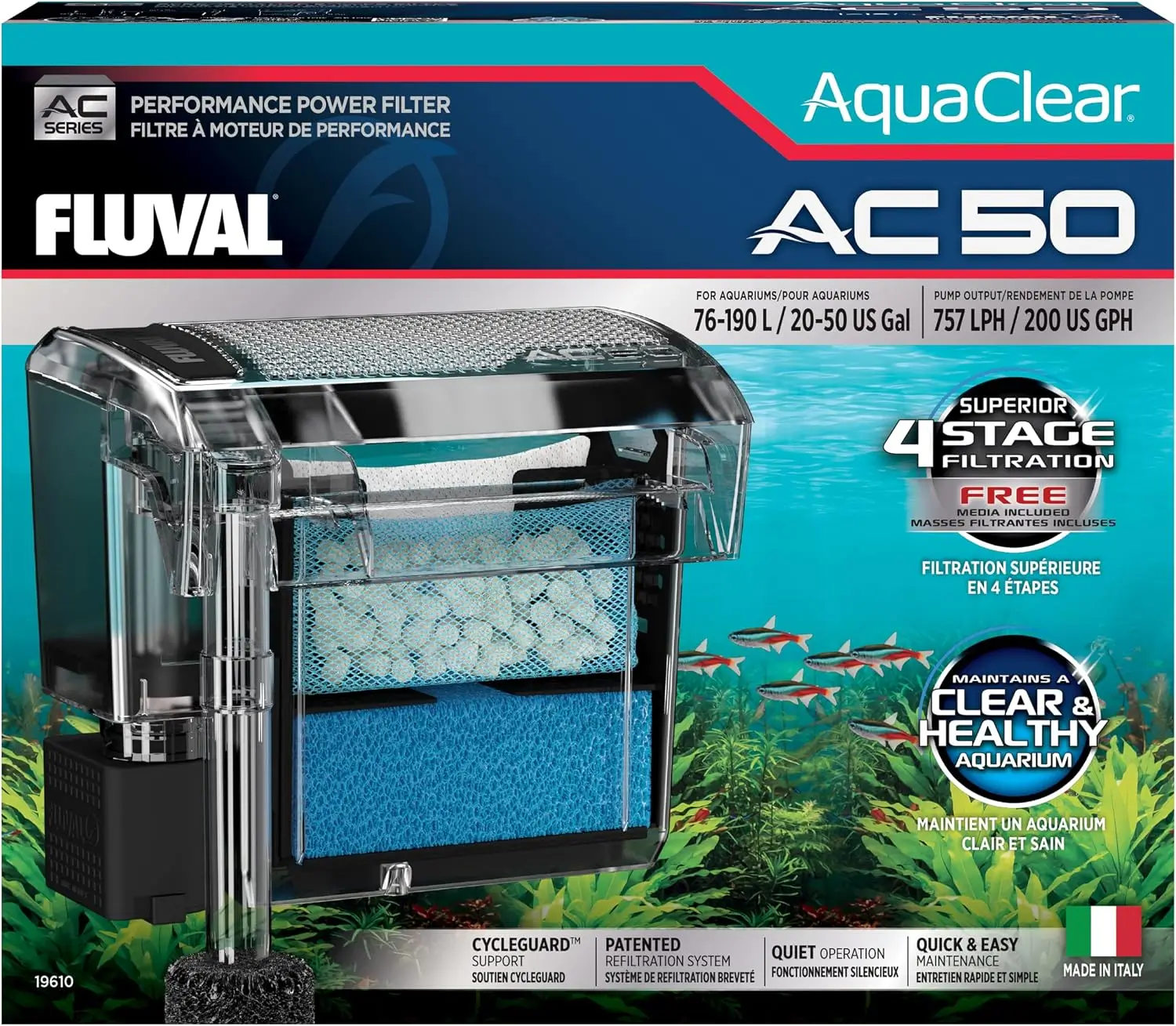
Fluval AquaClear AC50
A practical HOB option for many 20–50 gallon community aquariums, with adjustable flow and separate media.
20–50 gal
200 GPH
7W
Best overall HOB
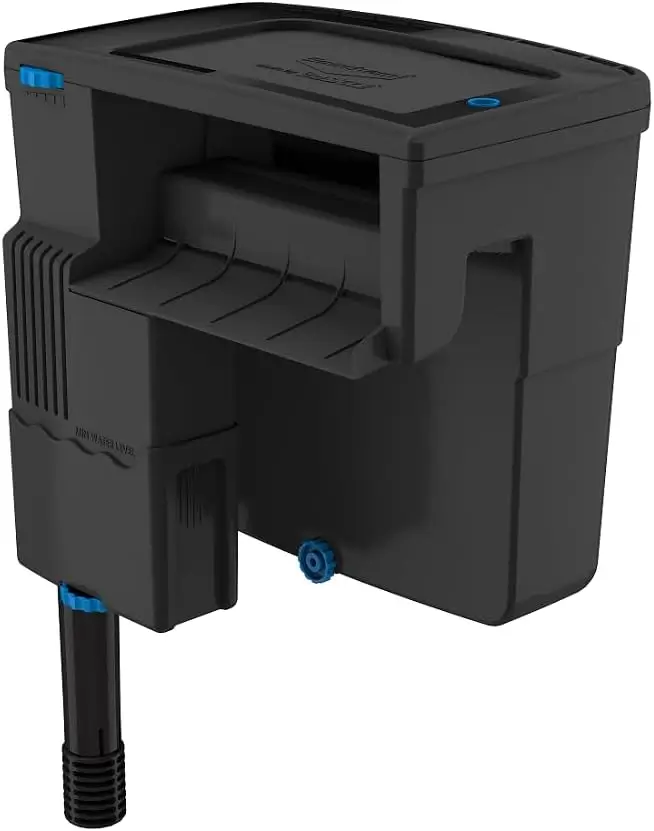
Seachem Tidal 55
Up to 55 gallons with adjustable flow, surface skimming, a large media basket and self-priming pump.
Up to 55 gal
250 GPH
6W
Best overall HOB
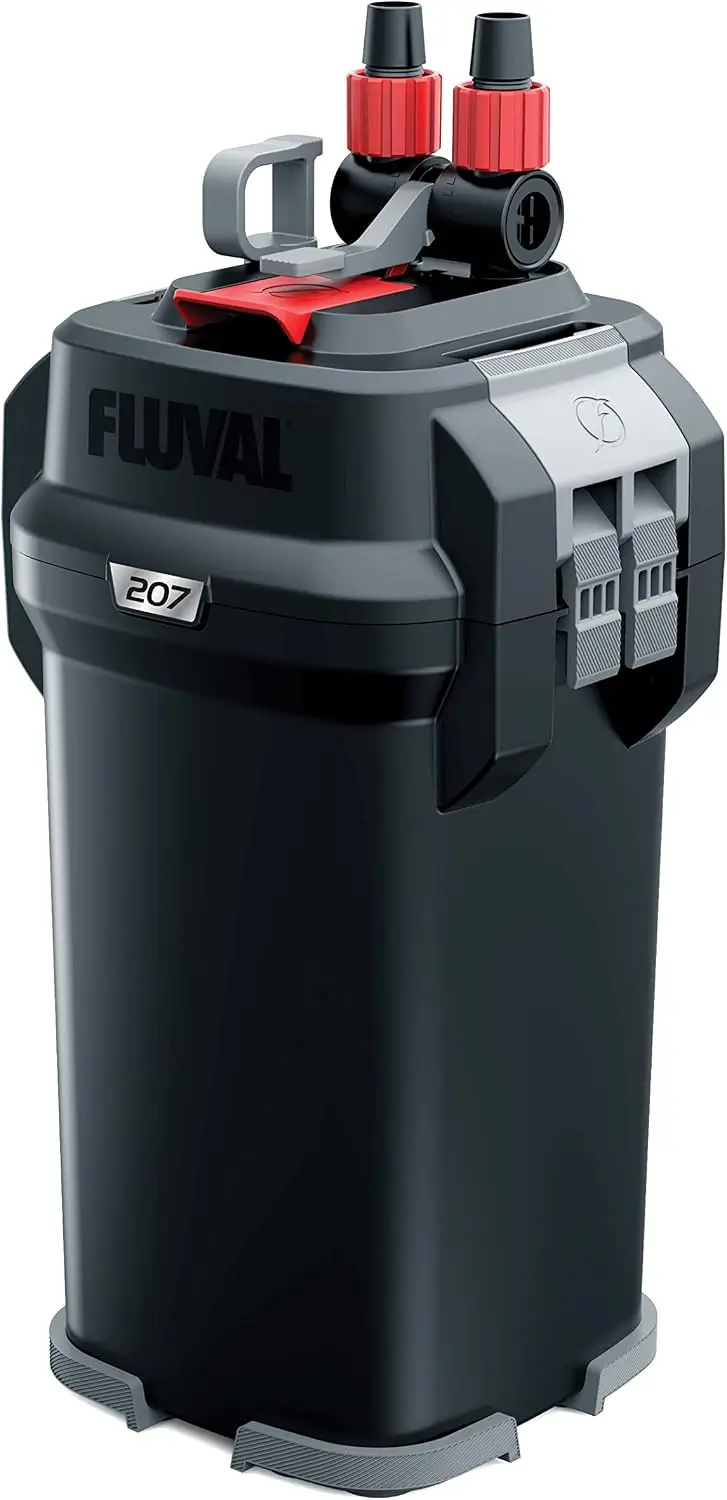
Fluval 207
A compact canister for 20–45 gallon aquariums when you want more enclosed filtration and media flexibility.
20–45 gal
121 GPH circulation
10W
Best overall HOB
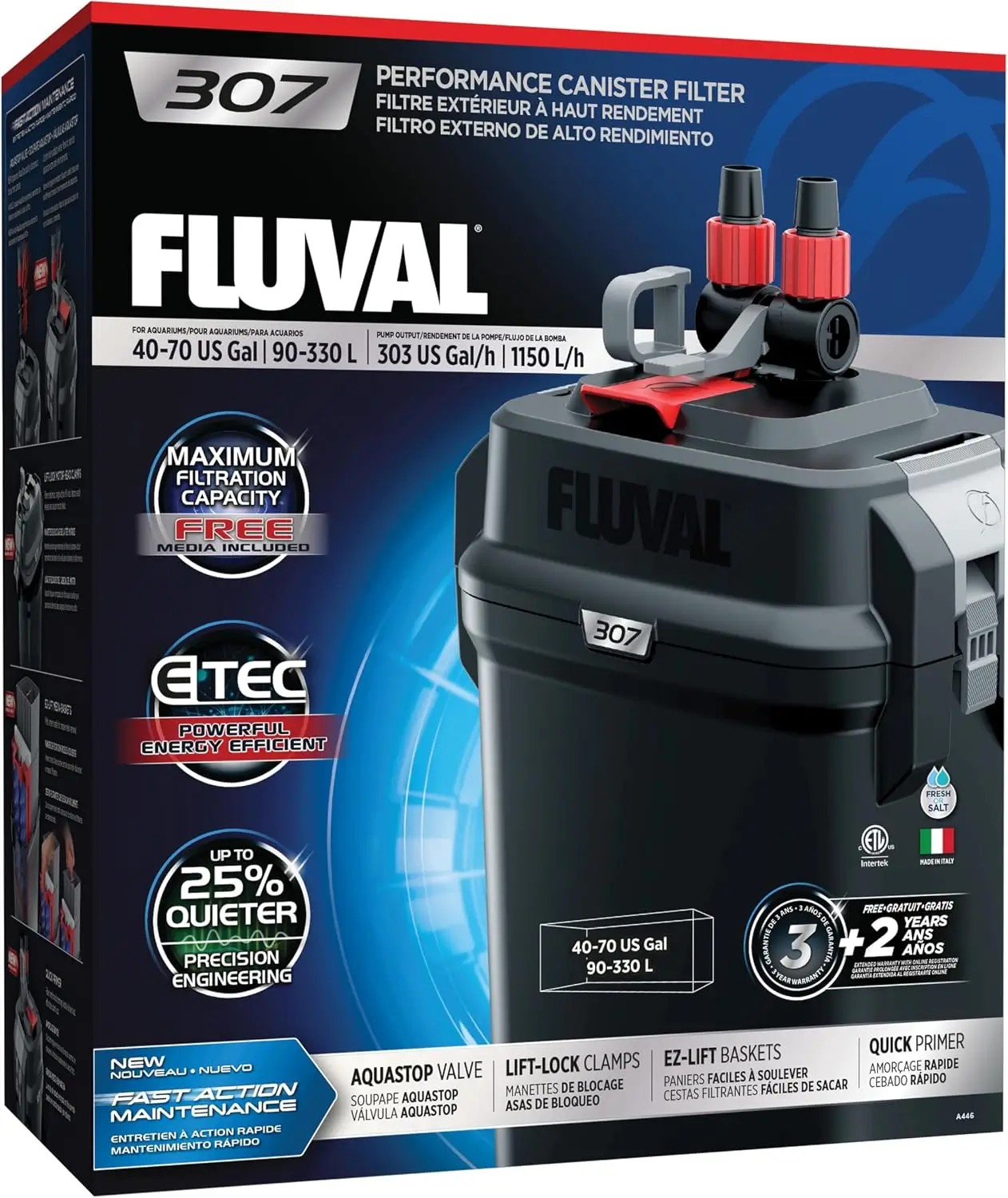
Fluval 307
A larger 07 Series canister for aquariums where extra media capacity and an enclosed setup make sense.
40–70 gal
Canister
16W
Best overall HOB
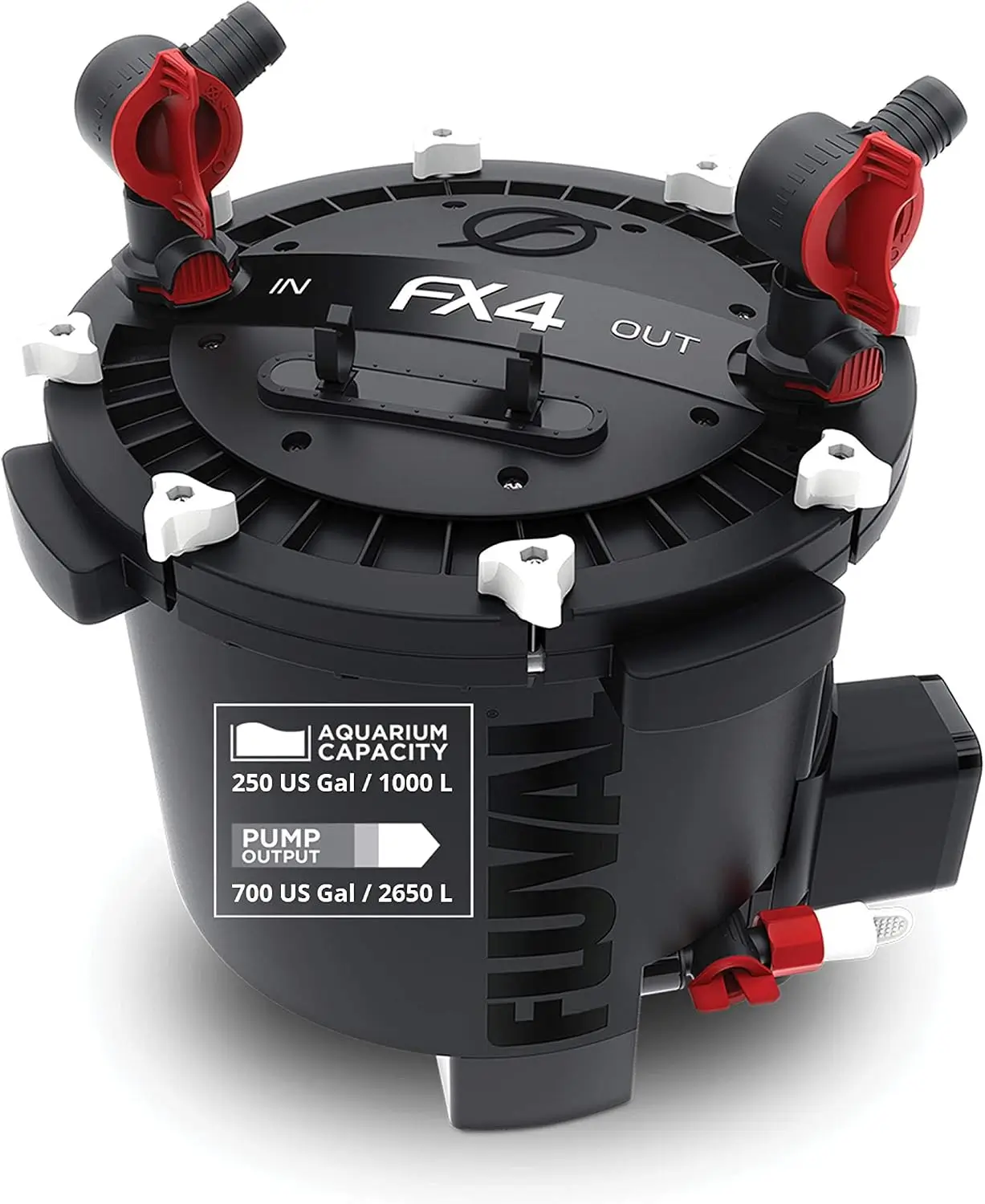
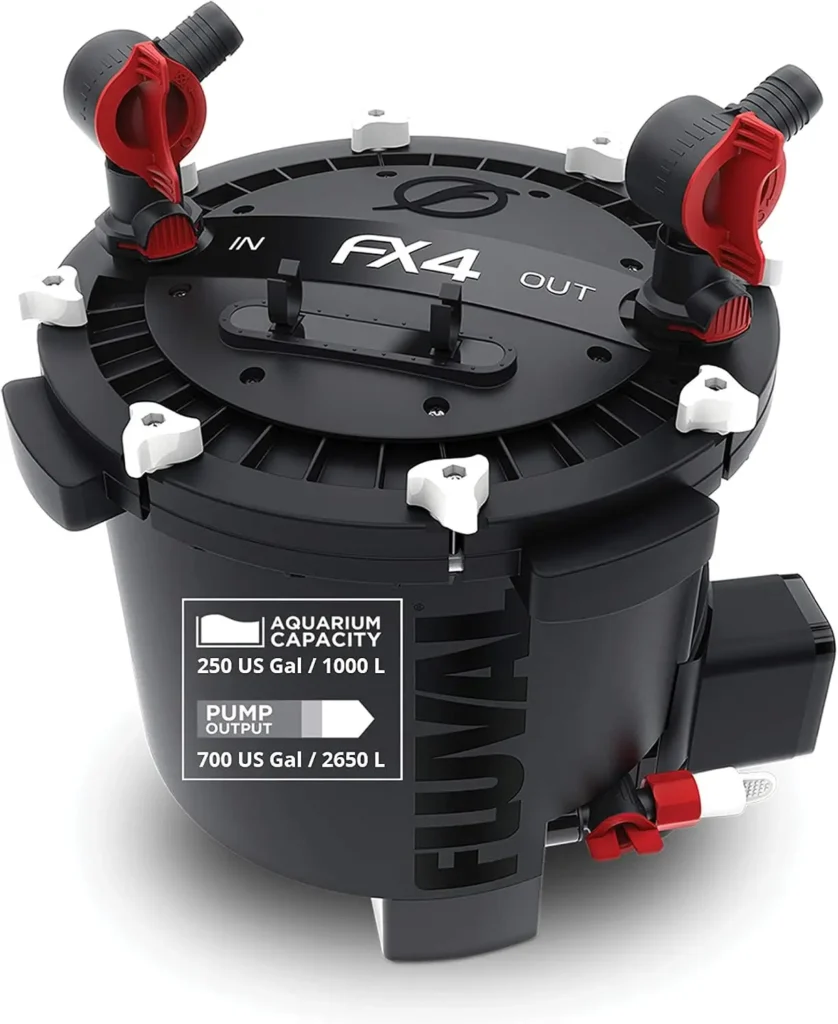
Fluval FX4
A high-capacity canister rated for aquariums up to 250 gallons, with 450 GPH filter circulation.
Up to 250 gal
450 GPH circulation
30W
Best overall HOB
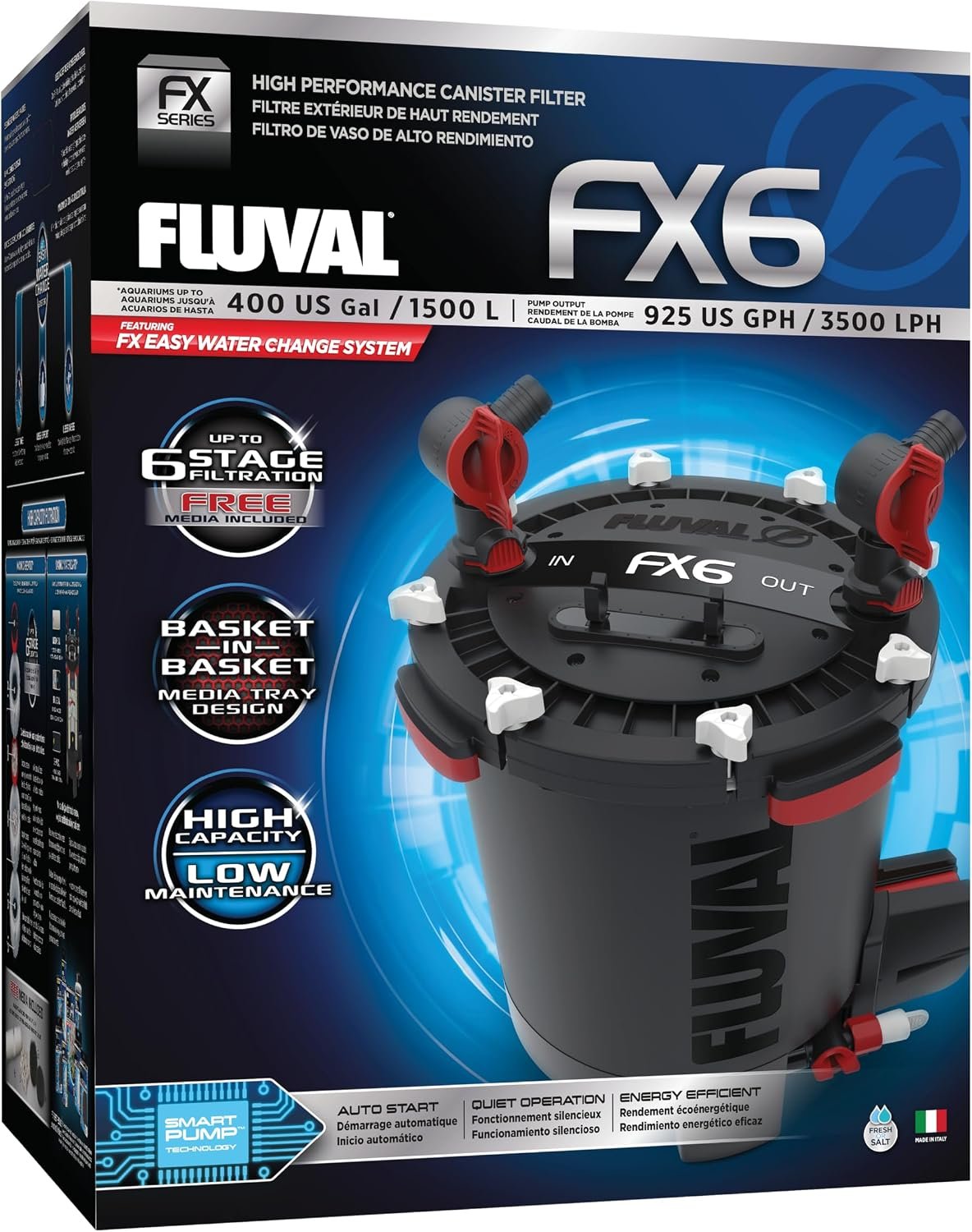
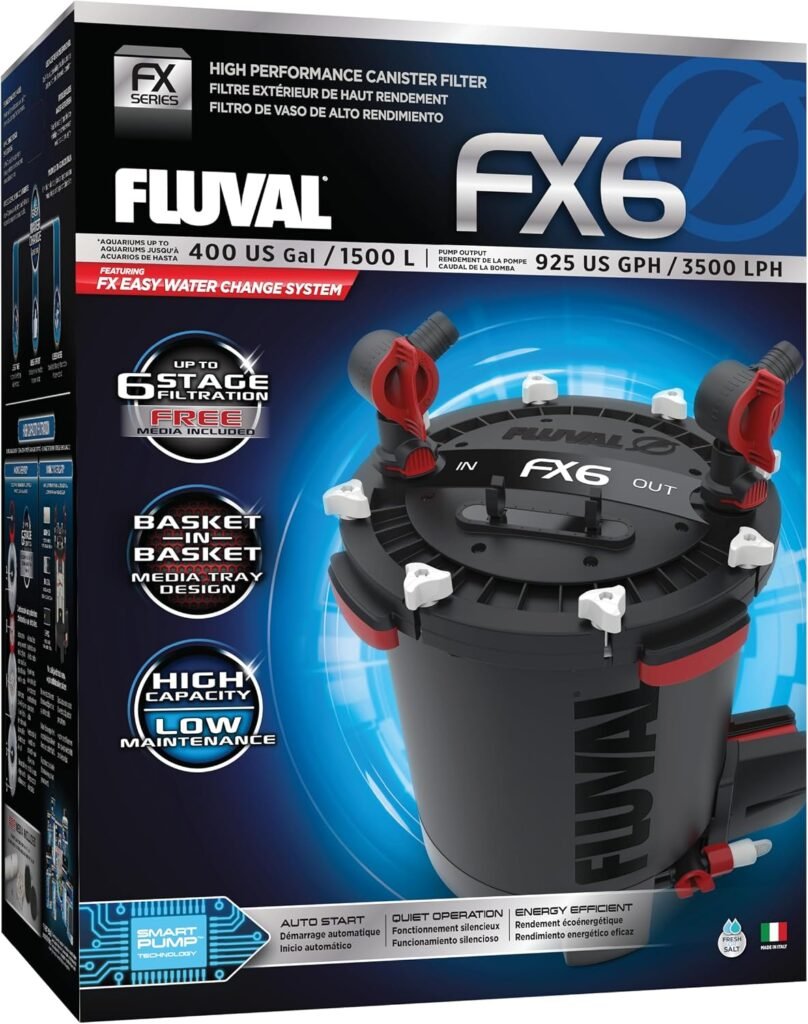
Fluval FX6
A heavy-duty canister rated for aquariums up to 400 gallons, with 563 GPH filter circulation.
Up to 400 gal
563 GPH circulation
43W
Best overall HOB
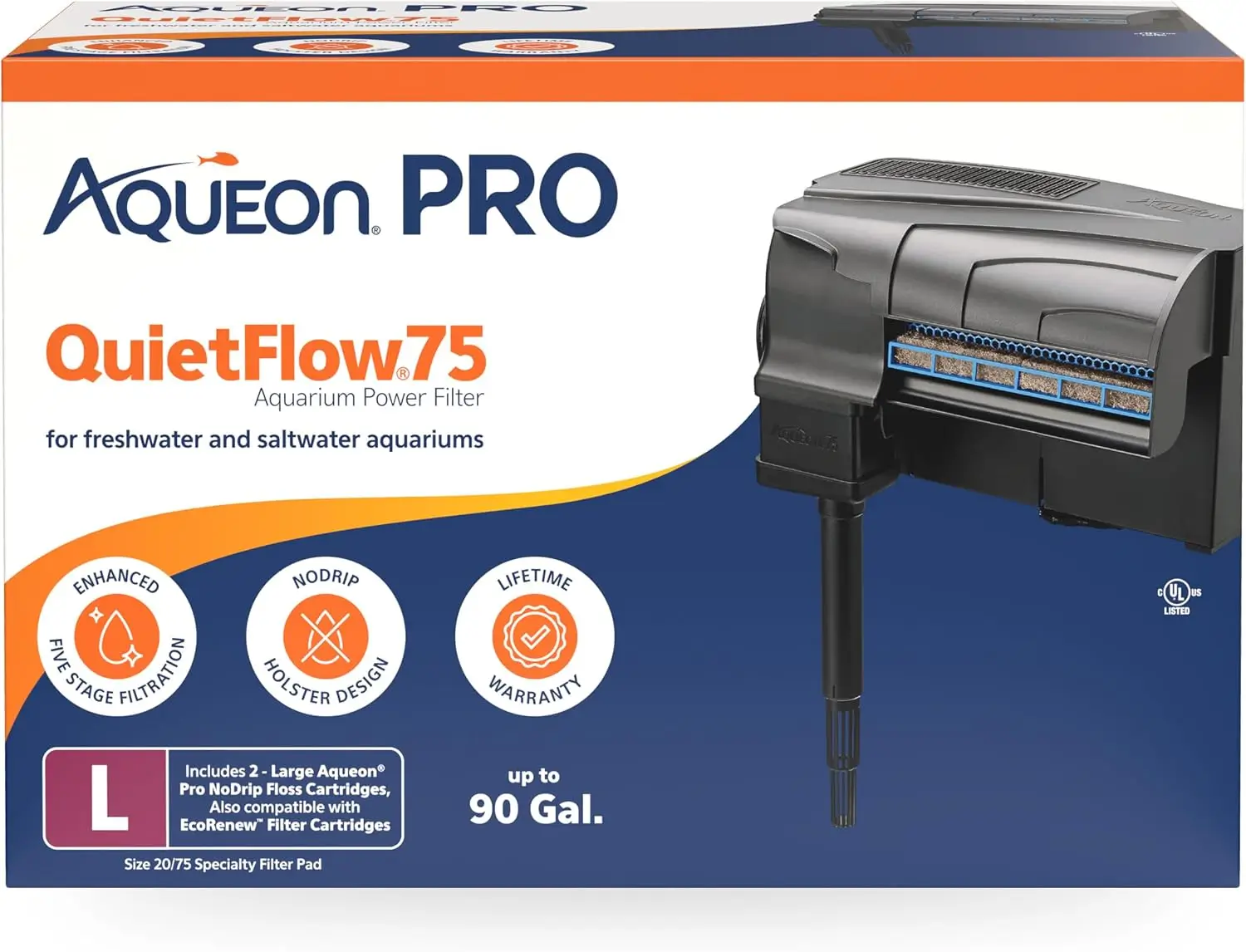
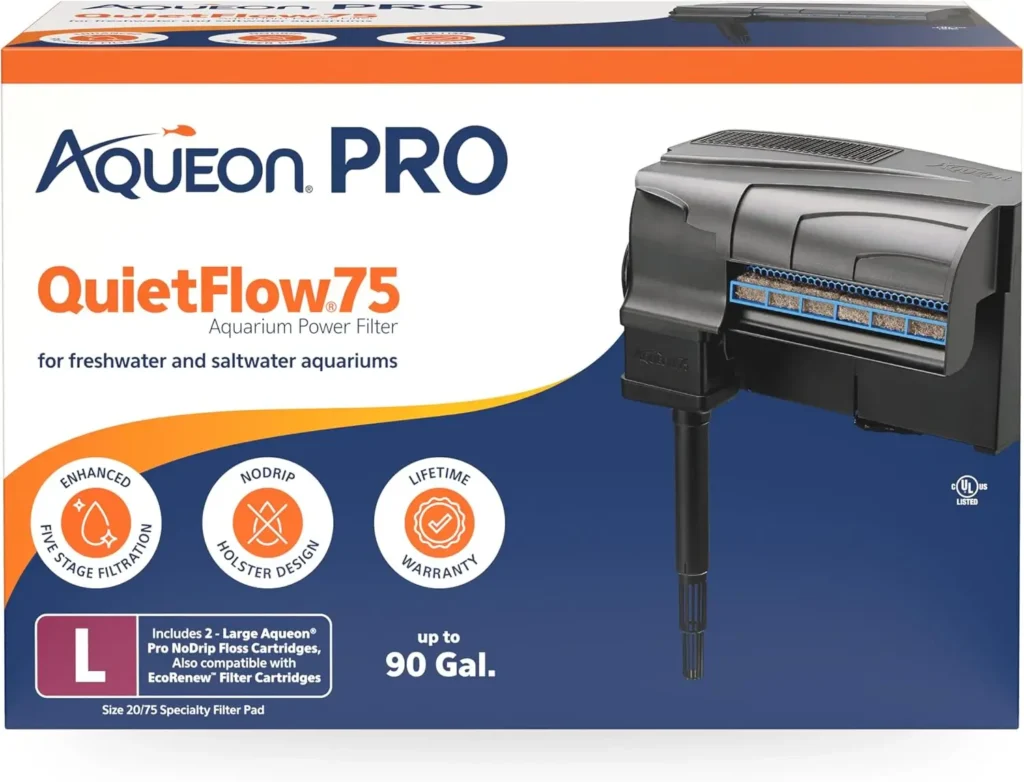
Aqueon PRO QuietFlow
A five-stage HOB option for fishkeepers who prefer a straightforward cartridge-based maintenance approach.
Model dependent
5-stage
HOB
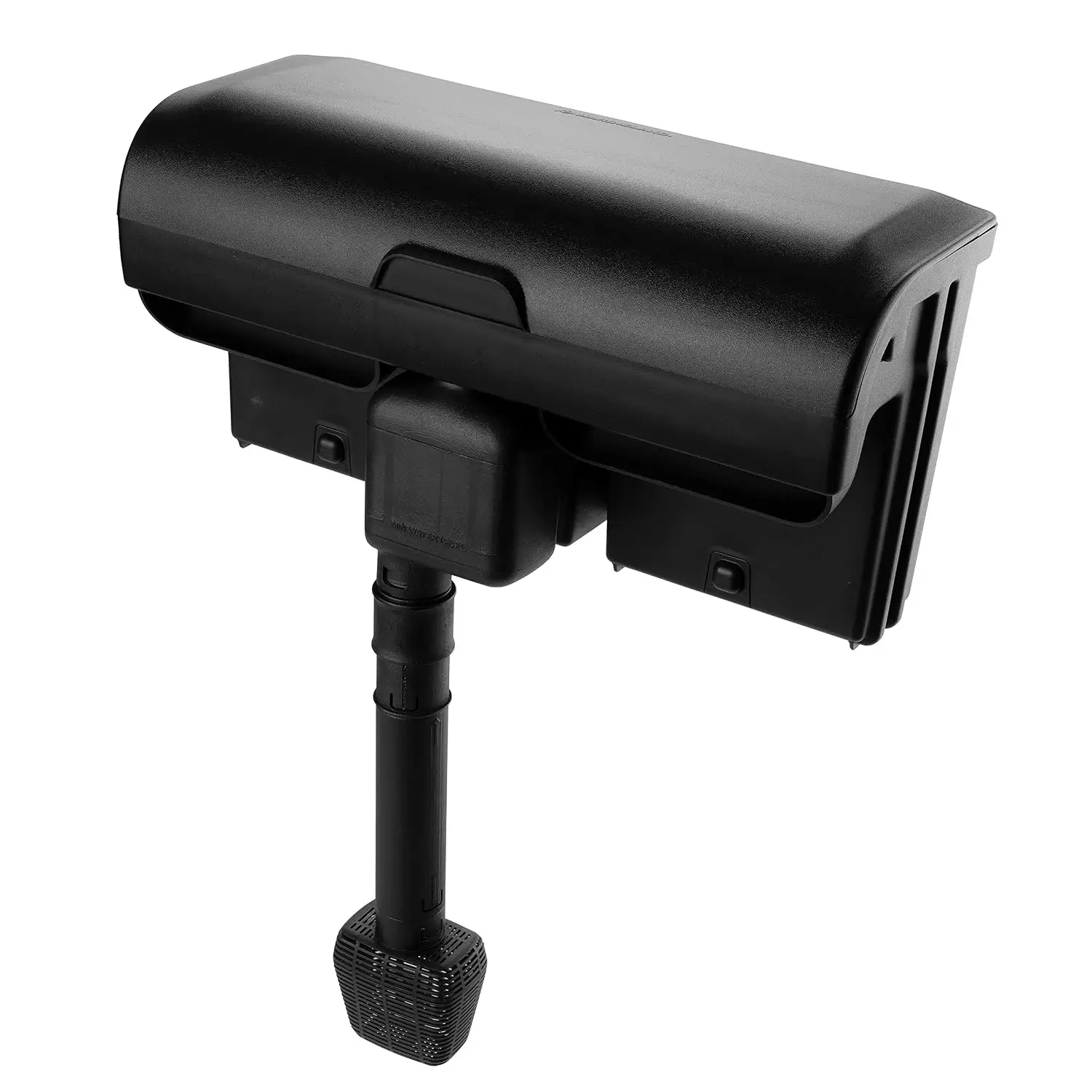
Best overall HOB
Marineland Penguin PRO
A HOB line built around BIO-Wheel biological filtration, available in multiple tank-size models.
Model dependent
BIO-Wheel
HOB
Which Fish Tank Filter Should You Buy?
If you do not want to read the entire guide, use this simple starting point.
For a 20–50 gallon community tank
Start with the Fluval AquaClear AC50.
It is a straightforward HOB filter with adjustable flow and multi-stage filtration. The current AC50 is rated for 20–50 gallon aquariums and has a maximum flow rate of 200 GPH.
For a 55-gallon tank
Look closely at the Seachem Tidal 55.
It is rated for aquariums up to 55 gallons and provides 250 GPH of flow. Its adjustable flow, surface skimmer, large media basket, self-priming pump, and maintenance alert make it particularly interesting if you want more control over your filtration.
For a 20–45 gallon tank where you want a canister
The Fluval 207 is a strong starting point.
It is designed for 20–45 gallon aquariums and has a 1.8-liter basket volume. One important detail is that Fluval lists both pump output and filter circulation, so do not compare the 206 GPH pump figure directly with a different filter’s circulation figure.
For a 40–70 gallon aquarium
Move up to a larger canister such as the Fluval 307 if you want more media capacity and the enclosed canister format.
For very large or heavily stocked aquariums
Look at the Fluval FX4 or FX6.
The FX4 is rated up to 250 gallons, while the FX6 is rated up to 400 gallons. These are substantially larger filtration systems than a normal HOB filter.
For shrimp or fry
Do not automatically buy the most powerful filter.
A sponge filter or a powered filter with a suitable intake pre-filter can be a better match when protecting very small livestock and controlling water movement is important.
Our Top Fish Tank Filter Picks
1. Fluval AquaClear AC50
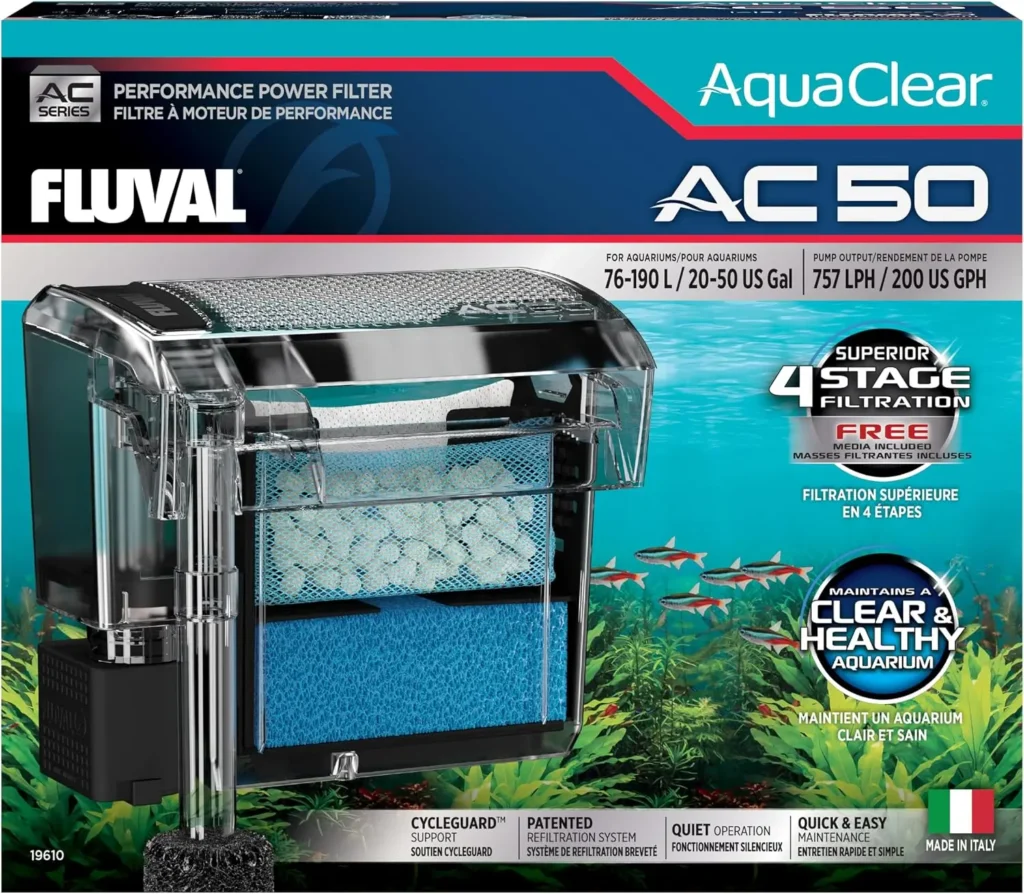
Best Overall HOB Filter for 20–50 Gallon Tanks
The Fluval AquaClear AC50 is where I would start for many typical freshwater community aquariums. It is a hang-on-back filter, so installation is considerably simpler than setting up a canister. You hang it on the back of the aquarium, install the intake, add the included media, fill it as instructed, and get it running.
The current AC50 is rated for 20–50 gallon aquariums, with a maximum flow rate of 200 GPH and power consumption of 7 watts. What I particularly like about the design is that you are not locked into a tiny disposable cartridge. The filter uses separate media and gives you control over what filtration media you use.
AC50 key specifications
|
Specification |
Fluval AC50 |
|---|---|
|
Filter type |
HOB |
|
Aquarium size |
20–50 gallons |
|
Maximum flow |
200 GPH |
|
Power |
7W |
|
Filtration |
Mechanical, chemical, biological |
|
Flow control |
Yes |
|
Saltwater compatible |
Yes |
|
Included media |
Yes |
Why I would choose it
The AC50 makes sense if you want:
Choose this filter if: you have a 20–50 gallon aquarium and want a simple HOB setup without moving to a canister.
2. Seachem Tidal 55
Best HOB Filter for a 55-Gallon Aquarium
The Seachem Tidal 55 takes the HOB concept and adds several features that make it more flexible than a basic hang-on-back filter.
It is rated for aquariums up to 55 gallons and has a 250 GPH flow rate.
The feature I find particularly useful is the adjustable flow. You can reduce the flow when your fish do not need strong water movement instead of simply accepting the maximum output.
The Tidal 55 also has a surface skimmer, adjustable intake flow, a large filter basket, a self-priming pump, and a maintenance alert.
Another important difference is that Seachem does not design the Tidal around proprietary filter cartridges. The basket can hold the filtration media you choose.
Tidal 55 specifications
|
Specification |
Seachem Tidal 55 |
|---|---|
|
Filter type |
HOB |
|
Aquarium size |
Up to 55 gallons |
|
Flow |
250 GPH |
|
Power |
6W |
|
Filter volume |
0.32 gal |
|
Flow control |
Yes |
|
Surface skimmer |
Yes |
|
Self-priming |
Yes |
|
Warranty |
3 years, extendable to 5 years by registration |
Choose this if
You want an HOB filter but prefer:
3. Fluval 207
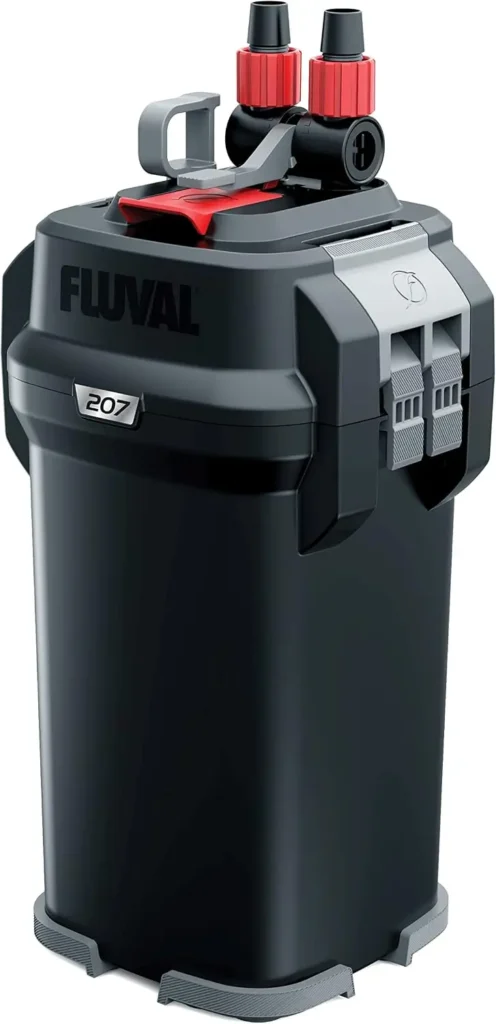
Best Medium Canister Filter for 20–45 Gallon Tanks
If you want to move away from HOB filtration and try a canister, the Fluval 207 is one of the first models I would look at for a medium-sized aquarium.
The 207 is rated for 20–45 gallons.
Fluval lists a 206 GPH pump output, but the manufacturer also lists 121 GPH filter circulation. This distinction matters because pump output and actual filter circulation are not the same specification.
The 207 has a 1.8-liter basket volume, a 5.3-liter canister volume, and uses 10 watts.
Fluval 207 specifications
|
Specification |
Fluval 207 |
|---|---|
|
Filter type |
Canister |
|
Aquarium size |
20–45 gallons |
|
Pump output |
206 GPH |
|
Filter circulation |
121 GPH |
|
Basket volume |
1.8 L |
|
Canister volume |
5.3 L |
|
Power |
10W |
Why choose a canister?
The biggest reason is not simply GPH.
A canister gives you a larger enclosed filtration system with room for different types of media. That can be useful when you want more control over mechanical and biological filtration.
The tradeoff is that canisters take more effort to install and maintain than a basic HOB.
Choose this filter if: you have a 20–45 gallon aquarium and specifically want a canister setup.
4. Fluval 307
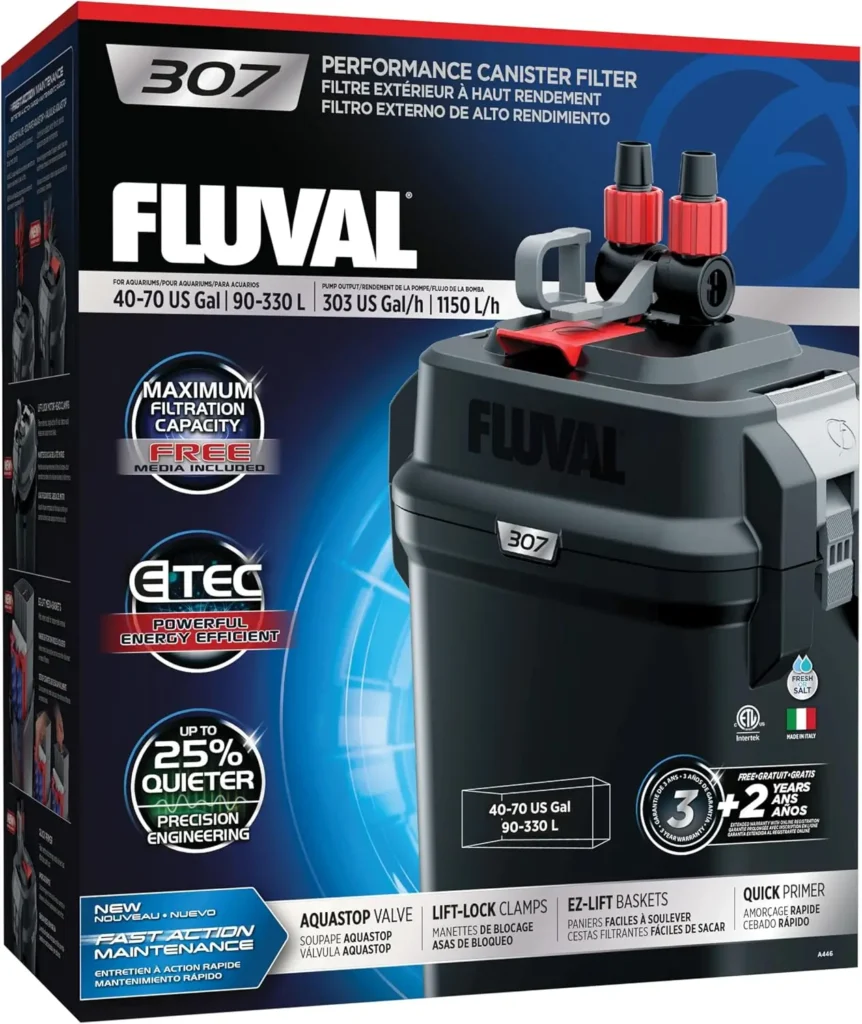
Best Canister Filter for 40–70 Gallon Tanks
The Fluval 307 is the natural step up from the 207 when your aquarium is larger.
Fluval rates the 307 for 40–70 gallon aquariums.
The 07 Series uses a multi-basket design, giving you room to organize mechanical, biological, and optional chemical media.
The 07 Series also includes features intended to make maintenance easier, including removable media baskets and an easier-to-use primer.
Choose the Fluval 307 if:
- Your aquarium is around 40–70 gallons
- You prefer canister filtration
- You want more media capacity than a typical HOB
- You are comfortable with slightly more maintenance
- You want an enclosed filtration system
5. Fluval FX4
Best Large Canister Filter
Once you move into large aquariums, the requirements change.
The Fluval FX4 is rated for aquariums up to 250 gallons.
It has a 700 GPH pump output, while Fluval lists 450 GPH filter circulation. It uses 30 watts, has a 3.7-gallon canister volume, and provides 1 gallon of biological volume.
That is a completely different class of filter from an AC50 or Tidal 55.
FX4 specifications
|
Specification |
Fluval FX4 |
|---|---|
|
Aquarium capacity |
Up to 250 gallons |
|
Pump output |
700 GPH |
|
Filter circulation |
450 GPH |
|
Canister volume |
3.7 gal |
|
Biological volume |
1 gal |
|
Power |
30W |
Choose this filter if:
You have a large aquarium, a substantial fish load, or simply need significantly more filtration capacity than a normal HOB can provide.
6. Fluval FX6
Best Heavy-Duty Filter for Very Large Aquariums
The FX6 sits above the FX4 in Fluval’s FX range and is rated for aquariums up to 400 gallons. It has a 925 GPH pump output and 563 GPH filter circulation, with a 5.28-gallon canister volume and 1.5 gallons of biological volume.
At this size, the question is no longer simply “What is the best filter?”
It becomes:
How much filtration capacity does my aquarium actually require? For a large aquarium with a high bioload, the FX6 gives you a much larger filtration platform than a standard HOB.
Choose this filter if: you are working with a very large aquarium and need a high-capacity canister system.
7. Aqueon PRO QuietFlow
Best Option for Cartridge-Based Maintenance
Some aquarium keepers prefer a filter system that is simple and familiar. That is where the Aqueon PRO QuietFlow comes in.
The current PRO QuietFlow design uses a five-stage filtration system, including mechanical filtration, activated carbon, biological media, and a specialty pad.
It also uses a self-priming internal pump that can automatically restart after a power interruption. The NoDrip cartridge holster is designed to make cartridge handling less messy.
Choose this filter if:
The main thing to consider is long-term media cost. Before buying any cartridge-based filter, check how much replacement media costs and how often the manufacturer recommends replacing it.
8. Marineland Penguin PRO
Best for Aquarium Keepers Who Want BIO-Wheel Filtration
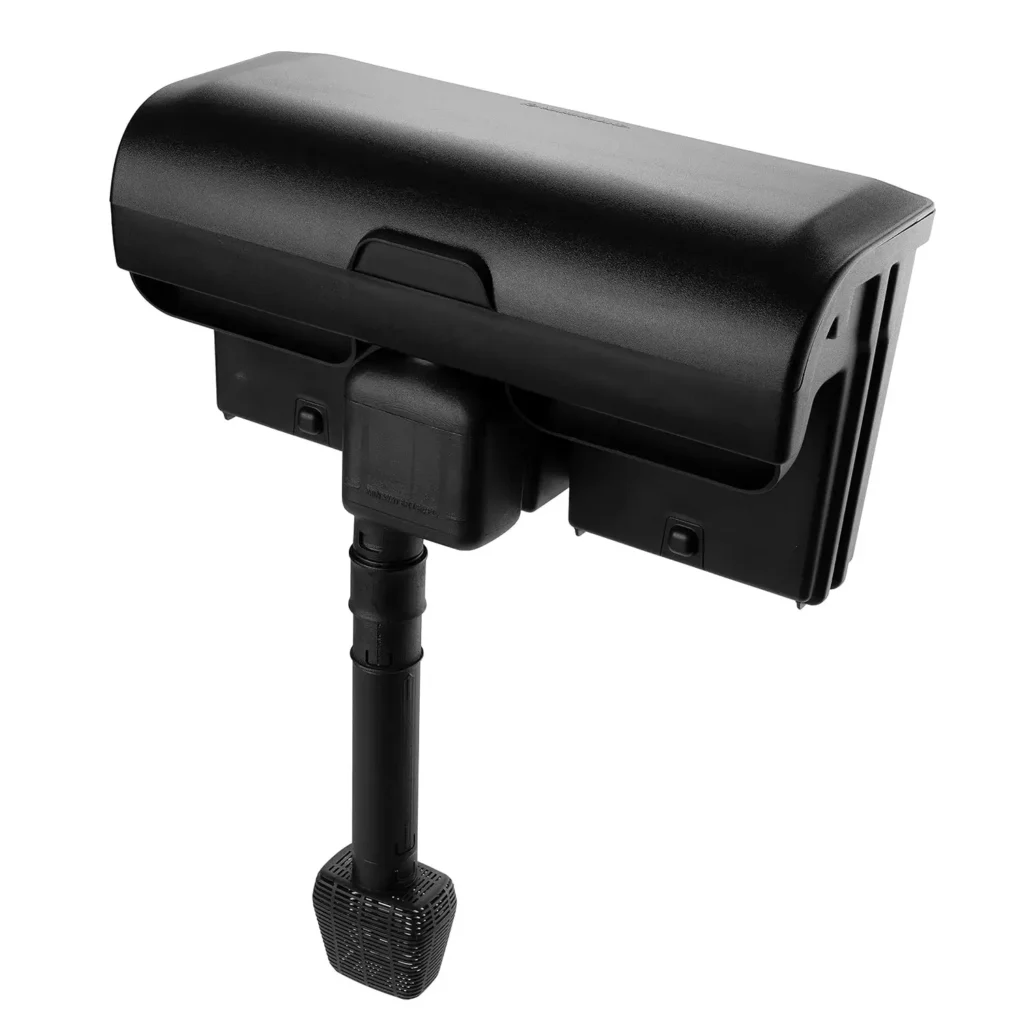
The Marineland Penguin PRO line is another HOB option worth considering.
The current lineup includes models designed for aquariums ranging from smaller tanks to larger setups, with BIO-Wheel filtration as one of the main features.
This can be an appealing choice if you specifically want the Penguin/BIO-Wheel approach.
One caution: manufacturer information for the largest PRO 375 model currently contains inconsistent flow information, so I would verify the exact model specifications before purchasing that particular size.
Choose this filter if: you specifically want a Marineland Penguin PRO and BIO-Wheel-style filtration.
Best Fish Tank Filter by Aquarium Size
Tank size is the easiest way to narrow your choices, but it should not be the only factor.
Use this as your starting point.
|
Aquarium Size |
Filters to Consider First |
|---|---|
|
5–10 gallons |
Sponge or small HOB |
|
10–20 gallons |
Small HOB or sponge |
|
20–30 gallons |
AC50, smaller canister |
|
30–45 gallons |
AC50, Tidal 55, Fluval 207 |
|
40–55 gallons |
Tidal 55, Fluval 207/307 |
|
55–70 gallons |
Fluval 307, larger HOB |
|
75–125 gallons |
Larger canister |
|
125+ gallons |
FX4, FX6 or appropriate large-system filtration |
Remember that manufacturer tank ratings are starting points. A heavily stocked aquarium may need a different approach from a lightly stocked aquarium of the same size.
How to Choose the Best Aquarium Filter
If you are still unsure, answer these five questions.
1. How big is your aquarium?
Start with the actual water volume.
A 20-gallon tank and a 75-gallon tank should not be approached in exactly the same way.
But don’t stop at the gallon rating.
2. What fish are you keeping?
Different fish have different preferences.
A fast-moving community fish setup may tolerate substantially more water movement than a betta setup.
Shrimp and fry also require special consideration because strong intake flow can become a problem for very small animals.
3. How heavily stocked is the tank?
This is one of the biggest factors people overlook.
Two 40-gallon aquariums can have completely different filtration requirements if one contains a small number of fish and the other is heavily stocked.
More livestock generally means more waste entering the aquarium.
4. How much water movement do your fish prefer?
More flow is not automatically better.
A filter should move enough water to provide effective filtration without creating unnecessary stress for fish that prefer gentler conditions.
If your filter has adjustable flow, that gives you more flexibility.
5. How much maintenance do you want to do?
This is where filter types become important.
If you want something simple and accessible, an HOB may be the easiest choice.
If you want more media capacity and do not mind additional maintenance, a canister may make more sense.
If you want a very simple biological filtration setup for a small or specialized aquarium, a sponge filter can be an excellent option.
HOB vs Canister vs Sponge Filter
There is no single filter type that is best for every aquarium.
|
Filter Type |
Best For |
|---|---|
|
HOB |
Beginners and community tanks |
|
Canister |
Medium to large tanks |
|
Sponge |
Shrimp, fry and simple setups |
|
Internal |
Small aquariums |
|
Sump |
Large/custom systems |
For most beginners
I would start with an HOB.
For larger aquariums
A canister becomes increasingly attractive.
For shrimp and fry
A sponge filter is often worth considering.
For large custom aquariums
A sump can provide a completely different level of filtration capacity and customization.
What Does an Aquarium Filter Actually Do?
A good aquarium filter is doing more than making the water look clear. Most aquarium filtration can be divided into three broad jobs.
Mechanical filtration
Mechanical media physically catches particles and debris. This is the part that helps remove things such as uneaten food and suspended waste from the water.
Biological filtration
Biological filtration provides surfaces where beneficial microorganisms can live. These microorganisms are an important part of the aquarium’s biological filtration system. This is one reason you should not treat every piece of filter media as disposable trash.
Chemical filtration
Chemical media is used to target specific dissolved substances. Activated carbon is one common example. Chemical filtration can be useful, but it does not replace mechanical and biological filtration.
How Much GPH Does Your Fish Tank Filter Need?
Tell us about your aquarium and we’ll estimate a practical filtration range and suggest filters that fit your setup.
How big is your aquarium?
Choose your tank size in gallons.
How heavily is your tank stocked?
Your livestock load affects how much filtration you may want.
How much water movement do you prefer?
This helps adjust the recommendation for flow-sensitive livestock.
Your Recommended Filtration Range
Based on the information you entered, here’s a practical starting point.
Think of this as a starting range, not a universal rule. Fish species, tank shape, filter design and actual circulation all matter.
A HOB filter is a practical choice for many community aquariums.
Filters That Fit Your Setup
Check Its GPH
Enter the advertised GPH to see how it compares with your recommended range.
You will often see aquarium filters marketed with a GPH number.
GPH means gallons per hour.
A common starting guideline is around 4–6 times the aquarium’s volume per hour, but that should not be treated as a universal rule.
The actual filter choice also depends on:
- Fish species
- Bioload
- Tank layout
- Filter media
- Flow resistance
- Water movement preferences
- Manufacturer’s filtration rating
There is another important detail that many buyers miss.
Pump output is not always the same as filter circulation
For example, Fluval lists the 207 with:
- 206 GPH pump output
- 121 GPH filter circulation
Those are different measurements.
So don’t compare two filters simply by taking one manufacturer’s pump output and comparing it directly with another manufacturer’s filter circulation figure.
Cartridge Filters vs Reusable Filter Media
This is an important consideration before buying your first filter. Some filters are built around replaceable cartridges. Others use separate foam, biological media, and optional chemical media.
Cartridge-based system
Reusable media system
What About Aquarium Filter Maintenance?
Even the best fish tank filter cannot compensate for poor maintenance.
The exact schedule depends on the filter, aquarium, stocking and media.
A few basic rules will help.
Do not replace every piece of biological media at once
Established biological media contains the microorganisms your aquarium relies on for biological filtration.
If media needs cleaning, follow the manufacturer’s instructions and avoid unnecessarily replacing all established biological media at once.
Watch the flow
A noticeable reduction in flow can be a sign that mechanical media or other parts of the filter need attention.
Do not wait until the filter completely stops
Regular inspection is easier than dealing with a filter that has become heavily clogged.
Check the intake
The intake is one of the first places where debris, plant material and other waste can accumulate.
Clean according to the filter manufacturer’s instructions
Different filters have different designs, media and maintenance requirements.
Common Fish Tank Filter Mistakes
Buying the biggest filter possible
More flow is not automatically better. A filter needs to match the aquarium and its inhabitants.
Looking only at GPH
GPH is useful, but it is not the entire filtration story. Media capacity, tank rating, bioload and actual circulation all matter.
Choosing based only on tank gallons
A lightly stocked 55-gallon aquarium and a heavily stocked 55-gallon aquarium may have very different filtration needs.
Ignoring flow-sensitive fish
Some fish prefer gentler water movement.
If your filter has adjustable flow, that can make it easier to create a suitable environment.
Forgetting replacement-media costs
A filter is not a one-time purchase.
Before buying, look at the ongoing cost and availability of replacement media.
Replacing all biological media at once
Established biological media should be handled carefully because it supports your aquarium’s biological filtration.
Best Fish Tank Filters Comparison
|
Filter |
Type |
Tank Rating |
Flow/Output |
Power |
Best Use |
|
Fluval AC50 |
HOB |
20–50 gal |
200 GPH max |
7W |
Everyday community tanks |
|
Seachem Tidal 55 |
HOB |
Up to 55 gal |
250 GPH |
6W |
Adjustable HOB filtration |
|
Fluval 207 |
Canister |
20–45 gal |
206 GPH pump / 121 GPH circulation |
10W |
Medium canister setup |
|
Fluval 307 |
Canister |
40–70 gal |
Manufacturer rated |
16W |
Larger community tanks |
|
Fluval FX4 |
Canister |
Up to 250 gal |
700 GPH pump / 450 GPH circulation |
30W |
Large aquariums |
|
Fluval FX6 |
Canister |
Up to 400 gal |
925 GPH pump / 563 GPH circulation |
43W |
Very large aquariums |
|
Aqueon PRO QuietFlow |
HOB |
Model dependent |
Model dependent |
Model dependent |
Cartridge-based setup |
|
Marineland Penguin PRO |
HOB |
Model dependent |
Model dependent |
Model dependent |
BIO-Wheel filtration |
Fish Tank Filter Buying Checklist
Before clicking the Buy button, check these things:
Best Fish Tank Filters on Amazon
Prices change frequently, so I recommend checking the current Amazon price rather than relying on a fixed price printed in an article.
| Product | Best For | Amazon |
| Fluval AquaClear AC50 | 20–50 gallon tanks | Check Price on Amazon → |
| Seachem Tidal 55 | Up to 55 gallons | Check Price on Amazon → |
| Fluval 207 | 20–45 gallon canister setup | Check Price on Amazon → |
| Fluval 307 | 40–70 gallon tanks | Check Price on Amazon → |
| Fluval FX4 | Large aquariums | Check Price on Amazon → |
| Fluval FX6 | Very large aquariums | Check Price on Amazon → |
| Aqueon PRO QuietFlow | Cartridge-style filtration | Check Price on Amazon → |
| Marineland Penguin PRO | BIO-Wheel setup | Check Price on Amazon → |
Frequently Asked Questions
So, Which Fish Tank Filter Should You Buy?
If I had to narrow the choices down based on the type of aquarium you have, I would start here:
You have a 20–50 gallon community tank
Look at the Fluval AquaClear AC50.
It gives you a simple HOB setup, adjustable flow and separate filtration media.
You have a 55-gallon aquarium
Look at the Seachem Tidal 55.
Its adjustable flow, surface skimmer and large media basket make it a flexible HOB option.
You have a 20–45 gallon tank and want a canister
Look at the Fluval 207.
It is specifically designed for that tank range and gives you the larger enclosed filtration format.
You have a 40–70 gallon aquarium
Look at the Fluval 307.
This is where moving to a larger canister starts making more sense if you want additional media capacity.
You have a large aquarium
Look at the Fluval FX4 or FX6, depending on the aquarium size, stocking and filtration requirements.
You keep shrimp or fry
Start by considering a sponge filter or protected intake setup.
Gentle, appropriate water movement matters more than simply buying the highest-flow filter.
Final Thoughts
The best fish tank filter is not necessarily the filter with the highest GPH, the biggest tank rating, or the most expensive price tag.
It is the filter that fits your aquarium, your fish, your bioload and your maintenance routine.
For a straightforward 20–50 gallon community setup, an HOB such as the Fluval AC50 is an easy place to start. If you want more control and features from an HOB, the Seachem Tidal 55 deserves a close look. If you prefer canister filtration, the Fluval 207 and 307 cover useful medium-tank ranges, while the FX4 and FX6 are built for much larger aquariums.
If you are still undecided, don’t start by asking, “Which filter is the most powerful?”
Start with:
How big is my tank? What fish do I keep? How heavily stocked is it? And how much maintenance am I willing to do?
Once you answer those questions, choosing the right aquarium filter becomes much easier.